



Odors occur in an instant—so real-time analysis matters.
When an odor complaint is reported, one question immediately arises:
"Is the odor still there?"
Unlike many other air pollutants, odors are highly dynamic. Their concentration can change rapidly depending on temperature, humidity, wind direction, wind speed, and even operating conditions within industrial facilities.
Because odor events often appear and disappear within a short period of time, investigators frequently arrive after the source has already dissipated. This makes odor one of the most difficult environmental issues to identify and verify.f
Facilities such as industrial complexes, wastewater treatment plants, and waste processing sites can emit a variety of odor-causing
compounds, including:
Ammonia (NH₃)
Hydrogen sulfide (H₂S)
Methyl mercaptan (CH₃SH)
Sulfur dioxide (SO₂)
Nitrogen oxides (NOₓ)
Volatile Organic Compounds (VOCs)
These compounds are not released at a constant concentration.

Sampling on site → Transporting samples to a laboratory → Sample preparation → Instrumental analysis → Reviewing the results
Although laboratory analysis provides accurate results, it requires time for sample handling, preparation, and measurement.For odor events that occur only briefly, the original conditions may already have changed before the analysis is completed.

Why Real-Time Monitoring Matters
Environmental monitoring is rapidly evolving.
Rather than relying on a single measurement, today's focus is on continuously tracking how pollutant concentrations change over time.
Real-time monitoring enables users to determine:
When an odor occurred
How high the concentration became
How long it persisted
Where it spread
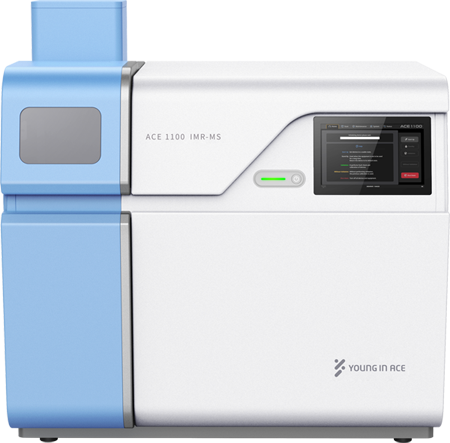

ACE 1100 IMR-MS │ Real-Time VOC and Odor Analysis
The ACE 1100 IMR-MS (Ion Molecule Reaction Mass Spectrometer) is Young In ACE's real-time mass spectrometry solution for VOC and gas analysis.
Using Ion-Molecule Reaction (IMR) technology, the system analyzes VOCs and various gases without sample pretreatment, providing immediate analytical results.
Key Features
Direct analysis without sample pretreatment
Immediate analytical results
Continuous 24/7 monitoring
Tracking concentration changes over time
Designed for on-site, real-time applications

 Mobile Lab │ Bringing the Laboratory to the FieldBecause odor events are highly transient, the ability to analyze them directly at the source is critical.
Young In ACE's Mobile Lab integrates the ACE 1100 IMR-MS into a vehicle-based analytical platform, allowing real-time measurements to be performed directly at odor complaint sites or environmental monitoring locations.
The Mobile Lab simultaneously records:
GPS location
Measurement time
Gas concentration
ACECube-MS, developed for the Mobile Lab platform, provides:
GPS-based mapping of measurement data
Real-time alarm notifications
Statistical analysis and historical trend management
Automatic PDF report generation
 Environmental Monitoring Is Moving Beyond Single Measurements
Environmental monitoring is no longer about capturing a single data point.
Today, the focus is on continuously tracking how conditions change over time and across locations.
For odor monitoring, success depends not only on analytical accuracy, but also on understanding:
When the event occurred,
Where it happened,
How quickly conditions changed.
Real-time mass spectrometry combined with a mobile analytical platform provides an effective solution for meeting these evolving environmental monitoring needs.
댓글 0.00 (0 Review)